Explore implementation and demos by engineering responsibility. Footage and captures show their recorded versions.
Enemy AI & combat framework
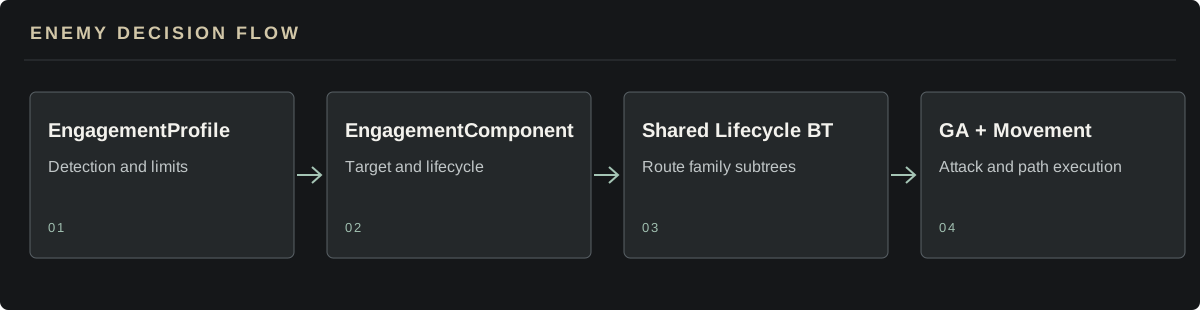
System relationship · Responsibilities explained below
01
Detection and engagement lifecycle
EngagementProfile configures sight, proximity, hit or region conditions; EngagementComponent owns target, memory, chase limits and the Dormant-to-Dead lifecycle.
02
Shared lifecycle tree and family combat trees
The shared behavior tree routes lifecycle branches; each family selects skills and actions in its own Combat, Ambient and Recovery subtrees.
03
Pathfinding, point selection and movement
Ground presets validate complete NavMesh paths and own MoveTo requests. Wall and air movement use their own support checks or bounded straight routes, without claiming general 3D pathfinding.
EnemyBase provides the ASC, attribute initialization, ability grants, and health-change notifications. Concrete enemies build their behavior trees and abilities on that foundation. Player weapons and enemies retain separate responsibilities, connected through GAS effects and combat feedback.
Shared enemy activation, pursuit & disengagement
Give Phantom, Medusa, Void and CoreMorph a shared engagement lifecycle while retaining their own combat trees and ability pacing.
AI profiles
Behavior Trees
Navigation
Lifecycle
Compose sight, proximity, hit and region conditions through a component and per-enemy profiles. Share dormant, entry, combat, recovery and death cleanup, with separate discovery, chase and memory settings. Separate destination selection from movement execution; Void continuously updates pursuit paths and retains engagement when navigation fails.
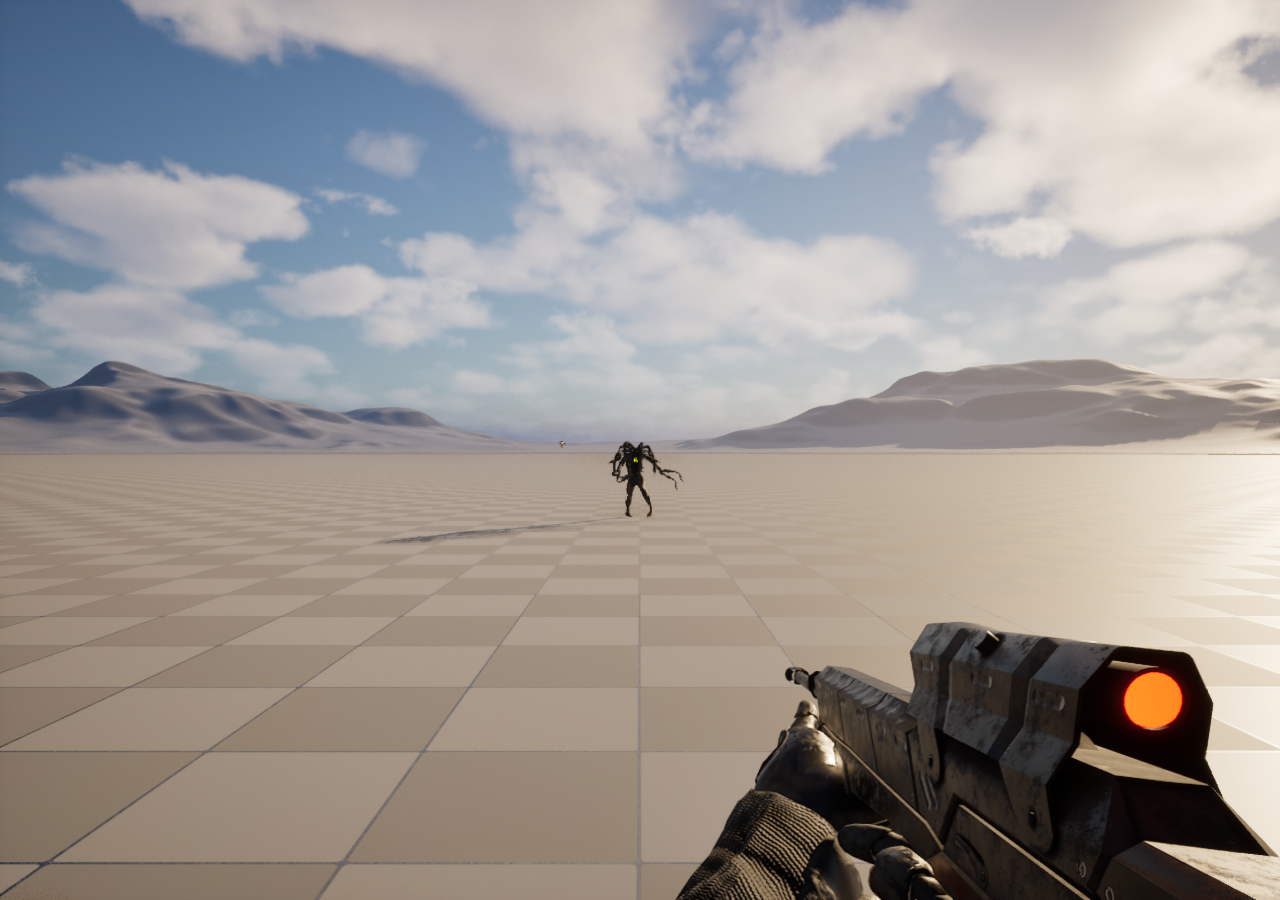
In-engine check, October 8, 2026: Void pursues the player through the expanded navigation area.